

Available Translation Services
Many elderly immigrants face vulnerability and uncertainty when accessing essential state services due to the lack of reliable, real-time translation support. These immigrant elders need translational assistance, and the government must take action to address this gap. The issue has become so pressing that numerous elders are now urging the Massachusetts government to implement comprehensive translation services across all state agencies.
Pressing Challenges
One of the most pressing challenges elderly immigrants face today is the language barrier. This is especially evident in Massachusetts, where many elderly immigrants have expressed deep frustration with state agencies. Navigating these systems is often described as inconvenient and overwhelming. Many elders report struggling to communicate, and without proper translation services or interpreters, they are left uncertain about important information-- such as how to complete forms or understand instructions. This puts their well-being and safety at risk.
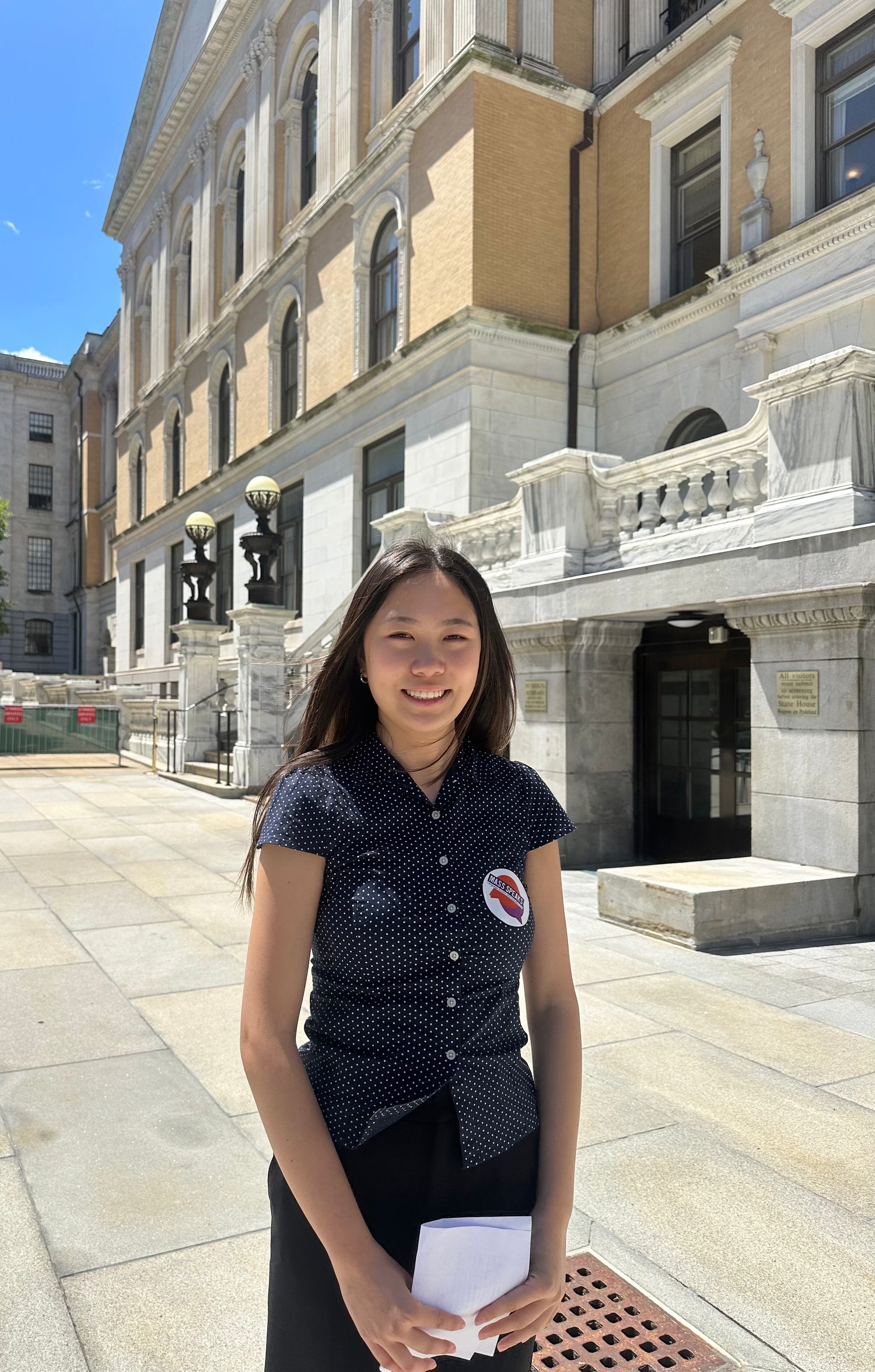
Legislative Advocacy: Testimony on Bill H.3384
Organized by the Mass Speaks Coalition, community members testified on the issue of language barriers. On July 22nd, Heritage Bridges delivered a three-minute oral testimony at the Massachusetts State House in support of the elderly immigrant community. Additionally, Heritage Bridges contributed by translating government pamphlets, preparing testimony forms, and submitting stories to advocate for the Language Access Bill.

Survey Collection with Mass Speaks
Heritage Bridges began advocating for this bill after hearing from elderly immigrants in our cultural literacy program about the language barriers they faced in their everyday lives. Many expressed feeling lost and unheard when trying to access vital state agencies. Most notably, Heritage Bridges repeatedly heard about problems individuals faced when interacting with state agencies such as the Massachusetts Police Department, MassHealth, DTA, and the RMV. To better understand the scope of this issue, Heritage Bridges distributed a survey to various community organizations. This infographic, put together by the Mass Speaks Coalition Steering Committee, highlights just how deeply language barriers affect the lives of elderly immigrants across Massachusetts. Join us in conversation and advocacy as we work to get this bill passed the finish line!
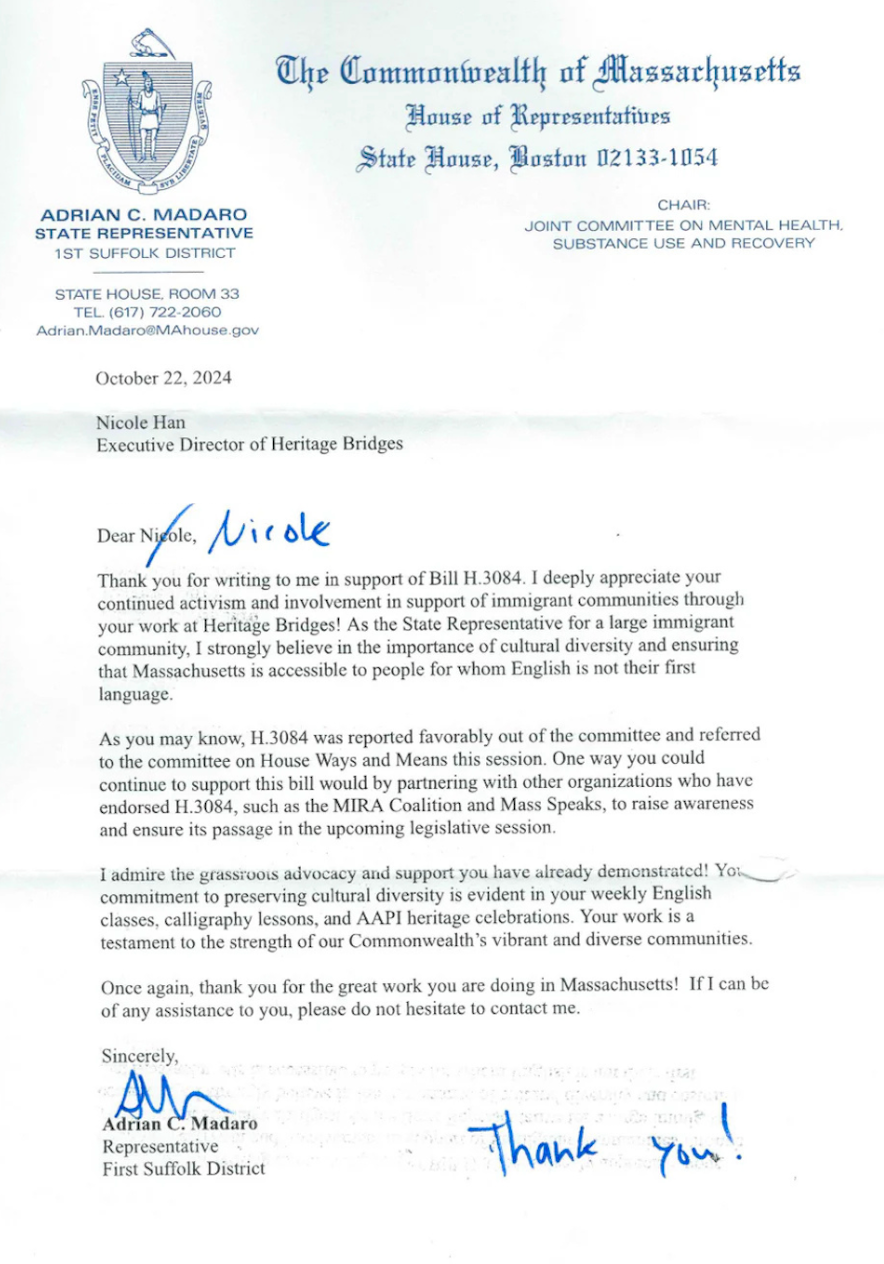
Bill's Sponsor Endorsement
Heritage Bridge's Letter of Recognition from the Commonwealth of Massachusetts, Rep. Adrian C. Madaro.
Bill H.3384: An Act relative to language access and inclusion:
By Representatives Madaro of Boston and González of Springfield, a petition (accompanied by bill, House, No. 3384) of Adrian C. Madaro, Carlos González and others for legislation to require state agencies to provide timely, culturally competent oral language services to all limited English proficiency individuals who seek to access services, programs, or activities. State Administration and Regulatory Oversight.

Collecting Testimonies
Have you ever struggled to understand or communicate with public agencies in Massachusetts because of language barriers?
We're here to amplify your voice. Share your story by clicking the button below or emailing us at: heritagebridges@gmail.com.

Why Bill H.3384?
Over the summer, I had the incredible opportunity to intern with State Representative Michael Day, a member of the Massachusetts House of Representatives. During my month-long internship, I discovered a deep interest for advocacy and gained hands-on experience in responding to constituents' needs, while closely analyzing the legislative process involved in passing a bill. Reflecting on that experience, I am now even more determined to advocate for Bill H.3384, which addresses critical issues around Language Access & Inclusion.
I encourage you to take the time to understand the importance of this bill, as it has the potential to significantly impact the lives of non-English speakers across the state by providing equitable access to vital services.
